Can This Orchid Be Saved? Maybe!
by Janet Woody, Librarian, Lewis Ginter Botanical Garden
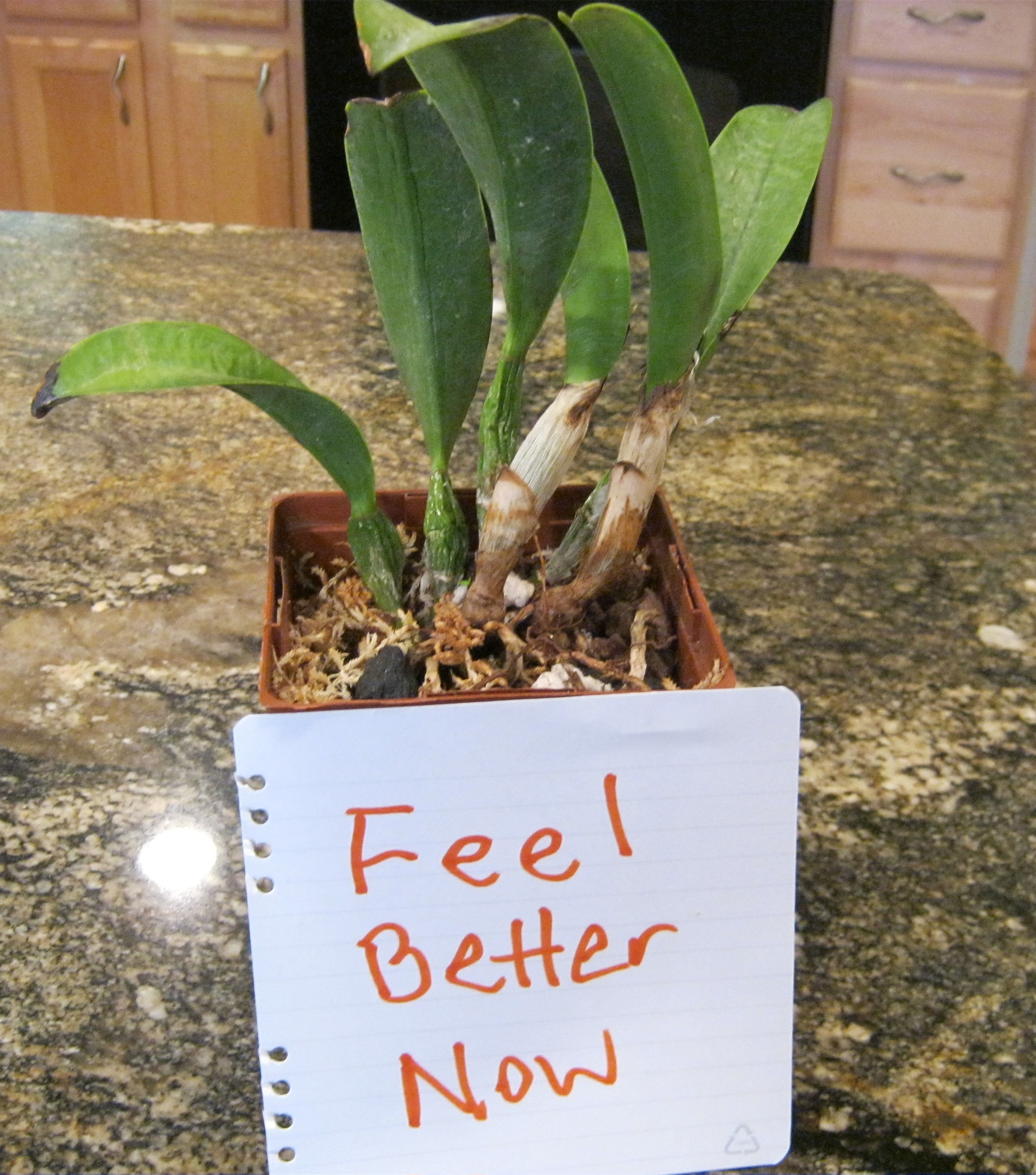 I want to follow up on the library program “Can This Orchid Be Saved?” that took place in the Garden library on March 17. Daune (pronounced Dawn) Poklis, our orchid docent for Orchids Galore! substituted for our planned speaker who was not able to attend. Many thanks to Duane for helping out at the last minute, and for her excellent presentation on orchid care. Here is a summary of what Duane told us:
–Re-pot your orchid every year after the bloom has faded. Cut off the bloom stalk down to the leaves
–Orchids like a mix of bark, charcoal, and sponge rock, for example, Better-Gro’s Special Orchid Mix or similar product. They don’t like regular potting soil.
–When repotting, wash the roots and remove any that look unhealthy or weak. Strong roots are thick, whitish-green, and will become pliable when soaked with water.
–Clean your cutting tool after cleaning an orchid. Dirty clippers can spread disease. And wash your hands too.
–Don’t increase pot size unless your orchid roots are too crowded. They like a snug pot.
–The purpose of repotting is to refresh the potting medium, not to increase the pot size.
–Clay or plastic pots are fine too. Soak clay pots before using. Clean well any pot that is being reused.
–Water your orchid generously once a week. Orchids like a thorough soaking, preferably over a sink. Don’t let your orchid pot sit in water.
–Fertilize your orchid once a month with a low dosage of an all-purpose potted plant fertilizer such as Miracle Gro. Too much fertilizer can burn the roots, so be careful.
–Orchids like indirect sunlight (direct sun can sunburn leaves).
–Orchids like air circulation. Open a window or use a fan to relieve their stuffiness.
–Be patient: most orchids bloom only once per year.
–Don’t be afraid of your orchid. They are tougher than you think.
My orchid, pictured here, is a cattleya and Duane thinks it might be OK once it rebuilds its weakened root system. I promise to do my best to restore this orchid to full health.